THE CITY JOURNAL / City & infrastructure
The GIFT City beneath the skyline: cooling, water, waste and the utility tunnel
Understand the infrastructure behind GIFT City’s streets—and what those systems do, and do not, mean for an ordinary visitor.
Jump to a section
Look beyond the towers
The useful details
- District cooling serves connected buildings; outdoor comfort still depends on weather and shade.
- Operational capacity and planned build-out are different; the infrastructure pages are not live performance reports.
- Technical facilities are not automatically public attractions—arrange permission and follow venue instructions.
Look beyond the towers
The most interesting part of GIFT City is not entirely visible from the road. Its developer describes a coordinated network for cooling, water, waste collection and underground utilities. Understanding those systems adds another layer to an architecture visit: the skyline is supported by infrastructure shared across buildings rather than a collection of unrelated services.
This explanation draws on GIFT City’s official infrastructure pages, checked on 14 November 2026. Those pages are undated descriptions of the systems. They should not be treated as a fresh commissioning announcement, a live performance dashboard or an invitation to enter operational facilities.
District cooling cools buildings, not the outdoor air
The district cooling system supplies chilled water through a distribution network to serve connected buildings. GIFT City describes central production, monitoring and metering, with recycled treated water used in the cooling circuit. It also explains that this approach reduces the need for individual outdoor air-conditioning units and building-level cooling towers.
For visitors, the distinction matters: district cooling is not street air conditioning. An outdoor walk still depends on the weather, shade, distance and your own comfort. Plan a sensible route between confirmed destinations instead of interpreting the term as a promise that every public space remains cool.
The official cooling page lists 10,000 tons of refrigeration as operational capacity and 180,000 as the planned total. These are the developer’s published capacity figures, not a measurement taken for this article. Planned capacity should not be presented as already installed across the entire district.
A utility tunnel is a maintenance strategy
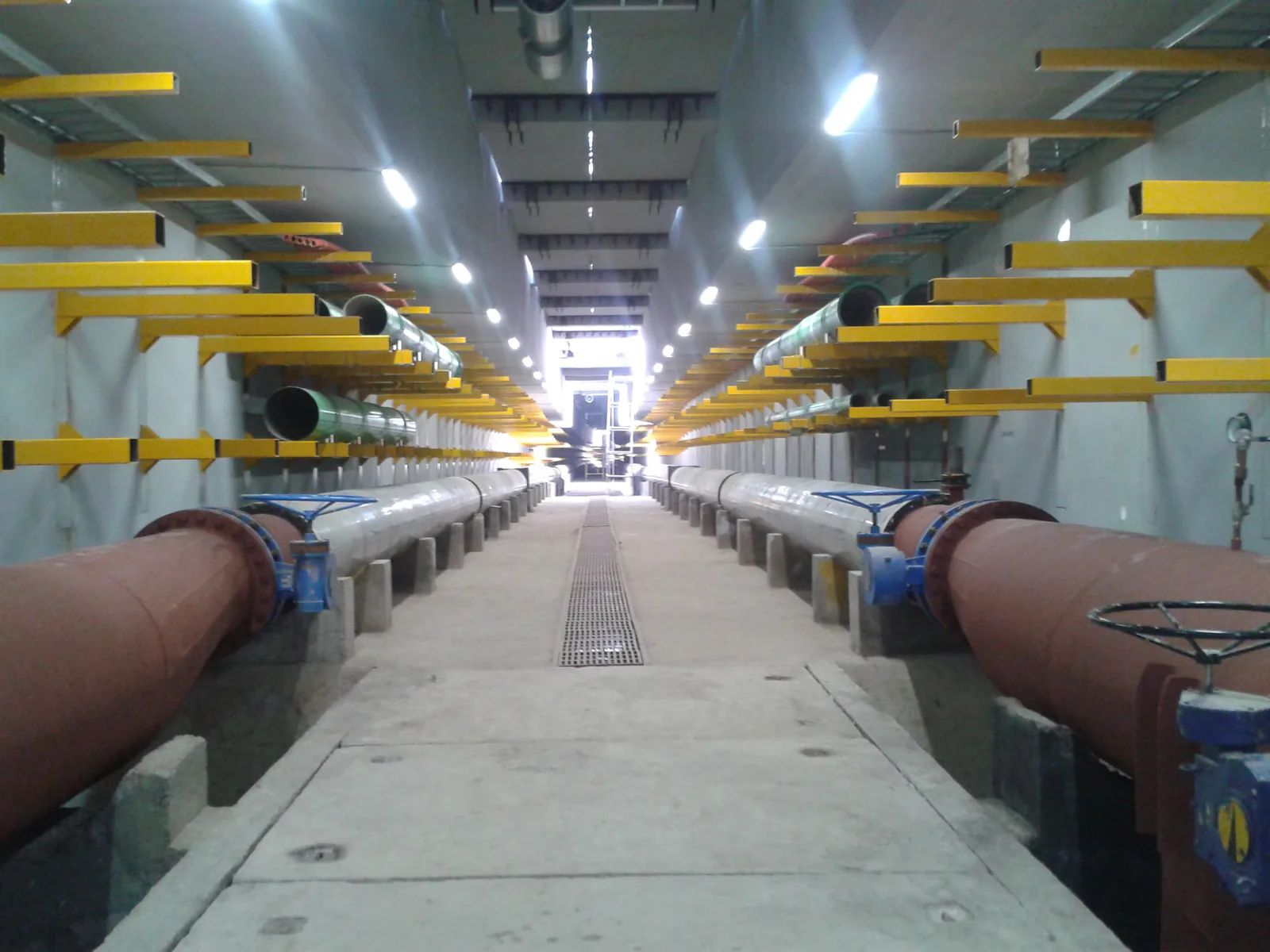
Below ground, the utility tunnel brings several services into an accessible corridor. The official description separates dry sections for power and communications cables from wet sections for pipes. It includes chilled water, water supply, treated-water reuse and other utility lines, with provisions such as ventilation, drainage and fire protection.
The point of the arrangement is to make maintenance and future changes less dependent on repeatedly opening developed streets. That is the idea behind GIFT City’s digging-free description. It does not mean no construction can occur anywhere, or that every future road project is unnecessary.
Treat the tunnel as operational infrastructure. The official technical description does not advertise a walk-in public tour. If you are arranging an academic or professional visit, ask the city or your host about permission before adding an underground facility to the itinerary.
The water story includes reuse
GIFT City describes water treatment and monitored distribution alongside sewage collection, treatment and reuse. Its water infrastructure page identifies district cooling, flushing and gardening as uses for disinfected treated wastewater. This is an important distinction between supplying water and making productive use of water after treatment.
Do not infer that a landscape outlet, service pipe or cooling connection is a drinking-water point. For a day visit, ask your venue where drinking water is available and use the facilities identified for guests. The city-scale system is interesting engineering; visitors still need ordinary, clearly identified amenities.
Automated waste still needs sensible disposal
The automated waste system uses chutes, collection points and a pneumatic pipeline network to move waste towards a central facility. GIFT City presents reduced manual handling and less conventional collection transport as intended advantages. Automation does not remove the need for suitable collection points and correct segregation.
Use the bins or disposal instructions provided by your venue. Do not put unfamiliar items into a chute or assume that a public bin accepts every material. If you are visiting with a group, agreeing simple cleanup arrangements is more useful than treating the system as a curiosity to operate.
Read the streets with realistic expectations
The developer’s wider infrastructure page describes separation of pedestrian and vehicle movement as part of the transport design. A design principle does not establish that every walking route is shaded, continuously accessible or open during nearby works. Ask for the correct entrance and assess the actual route on arrival.
A rewarding visit can combine the visible architecture with questions about what supports it: how a building receives cooling, where water is reused, and how maintenance reaches the services below. Use official diagrams to understand those connections, while keeping your walking itinerary within places confirmed open to you.
Questions, answered
Does district cooling make GIFT City’s streets air-conditioned?
No. The described system distributes chilled water to connected buildings. Outdoor walking comfort still depends on weather, shade and distance.
Can visitors enter the utility tunnel?
The official infrastructure description does not offer a walk-in public tour. Ask GIFT City or your host for permission before planning a technical visit.
Are all published infrastructure capacity figures already operational?
No. The official pages distinguish operational capacity from planned capacity. Read the label and avoid treating the eventual build-out as installed today.
Sources and review
- GIFT City: infrastructure overview ↗ · checked 14 November 2026; publication date not stated
- GIFT City: district cooling system ↗ · checked 14 November 2026; publication date not stated
- GIFT City: utility tunnel ↗ · checked 14 November 2026; publication date not stated
- GIFT City: smart water infrastructure ↗ · checked 14 November 2026; publication date not stated
- GIFT City: automated waste management ↗ · checked 14 November 2026; publication date not stated
Last edited 14 Nov 2026. Independent reporting; not an official announcement or a booking service.
YOUR NEXT READ
There’s more to the city.

Source dated 16 Nov 2026
UNDRR names GIFT City India’s first MCR2030 Resilience Hub
A 16 November UNDRR announcement puts GIFT City in a city-to-city learning network for resilience. What the recognition means for the place people work, study and visit.
Explore the story
Checked 17 Nov 2026
GIFT City’s feeder buses: read the route before planning the last mile
The official intra-city transport document distinguishes DTA and SEZ loops and named stops. Use it to understand the district, then check the current service for your actual journey.
Explore the story
Checked 14 Nov 2026
Central Park at GIFT City: what the phases mean for visitors
Food hubs, landscaped spaces and a larger park project share the Central Park name. Here is how to distinguish the established visitor offer from the next phase of development.
Explore the story